Adverse Childhood Experiences (ACEs) and Increase Risk of Symptoms
What happened to you as a child may be one of the most important — and most overlooked — drivers of chronic pain and symptoms in adulthood.
The good news is that your past does not need to define your future!
What Are ACEs?
Adverse Childhood Experiences — ACEs — are events or conditions during childhood (before age 18) that felt unsafe, unstable, or emotionally harmful. They include things that directly happened to you, as well as things that happened around you in your home environment.
The original ACE research, published by Felitti et al. in 1998, identified 10 categories spanning abuse, neglect, and household dysfunction. Since then, researchers have expanded our understanding to include a much broader range of experiences that can sensitize the developing nervous system.
See a LIST OF COMMON ACEs here
What the Research Shows
The connection between ACEs and chronic pain in adulthood is not theoretical — it is one of the most well-documented relationships in pain science.
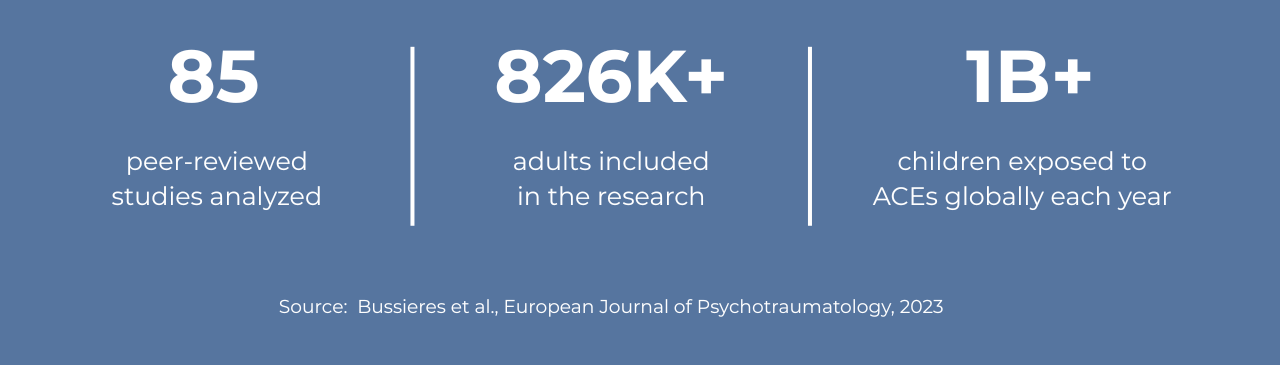
The largest meta-analysis of its kind analyzed 85 studies involving over 826,000 adults and found a clear, dose-dependent relationship: the more adverse experiences in childhood, the higher the risk of developing chronic pain and symptoms later in life.
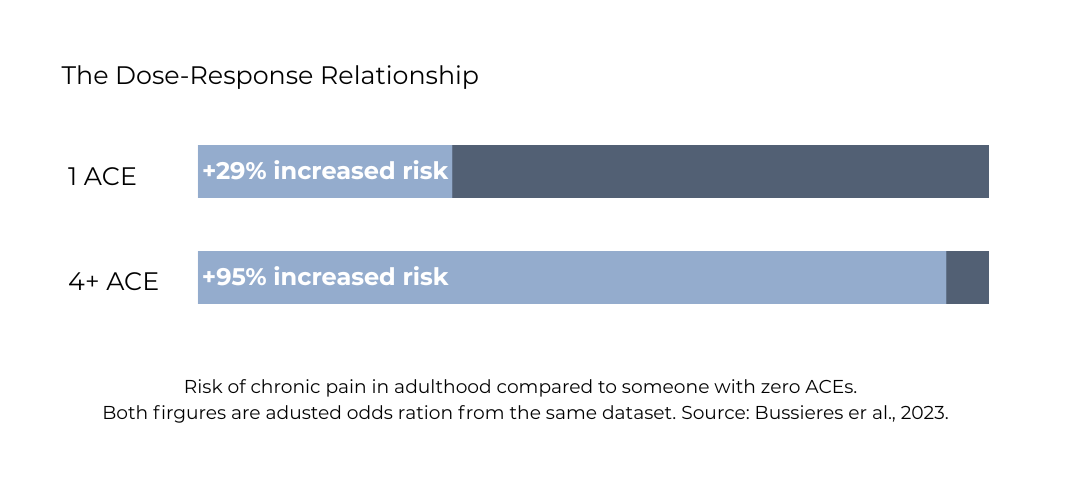
Why this dose-response pattern matters
The pattern tells us the nervous system is accumulating the impact of repeated stressful experiences over time — not just reacting to a single event.
Research also shows biological markers of this sensitization. Adults with a history of childhood stress show measurable abnormalities in cortisol — the body's primary stress hormone — making them more likely to develop chronic pain than those without these changes. (McBeth et al., 2007; Schubiner, 2021)
And critically — this sensitization can begin before we even have words for what happened. Studies show that human infants exposed to repeated painful medical procedures in their first weeks of life show increased pain responses to procedures months later. The nervous system begins learning and anticipating danger very early. (Taddio & Katz, 2005)
How ACEs Sensitize the Nervous System
When a child grows up in an environment that feels unsafe, unpredictable, or emotionally unsupportive, the brain and nervous system adapt to survive it. This is not a flaw — it is brilliant biological design. The nervous system becomes hypervigilant, scanning constantly for threat, primed to react faster and more intensely than it would otherwise.
Animal research confirms this: infants — across multiple species — exposed to stressful environments grow up with an overactive autonomic nervous system and an exaggerated fight, flight, or freeze response. (McEwen, 1998; Arborelius & Eklund, 2007)
The problem is that this hypervigilance doesn't automatically switch off when childhood ends. Emotional memories formed early are stored deep in the brain and can be easily triggered by similar experiences in adult life — sometimes without any conscious awareness that the old pattern has been activated.
Many people minimize their own childhood experiences because nothing overtly "terrible" happened. But the nervous system doesn't compare or rank experiences — it responds to what it felt like to be that child. Chronic unpredictability, walking on eggshells, absorbing parental anxiety, feeling like you don't fit in, or never quite feeling loved or accepted for who you are — these leave real imprints too.
This is not your fault.
You did not choose the home you grew up in. You did not choose the experiences that shaped your nervous system. Your increased risk for chronic pain or symptoms is not a character flaw, a weakness, or something you caused.
Understanding your ACE history is not about blame — it is about gaining clarity about a potential driver of the symptoms you are experiencing.
When you understand why your nervous system learned to stay on high alert, you can begin the work of helping it learn something different. Without awareness, nothing can change.

The Good News: A brain that learned danger can learn safety!
What makes this relevant to chronic pain and symptoms recovery is neuroplasticity — the brain's ability to change.
The same nervous system that learned to stay in alarm mode can learn that the threat has passed.
The patterns laid down in childhood are not permanent. They are learned responses, and learned responses can change. Meaning, your past does not have to define your future.
This is the foundation of the mindbody approach to recovery.
Two Ways to Explore Your Own ACE History
Most people underestimate the adversity they experienced in childhood — but for different reasons. Some minimize because they normalize what they grew up with, compare themselves to people who had it "worse," or protect their parents by telling themselves they did the best they could. Acknowledging the hurt can feel like a threat to that bond — even as adults. This isn't about blame. It isn't about how you feel toward your parents today. It's about what it felt like to be that child — and the imprint that experience left on a nervous system that was still forming.
Others know exactly what happened to them. The experiences were clear, significant, and the trauma impossible to minimize. Yet even then, many have never connected those experiences to the chronic pain and symptoms they live with today.
Wherever you land — two approaches can help you see your history more clearly.

Dr. Clarke's Butterfly Question
For those who feel their childhood was mostly okay:
Imagine yourself as a butterfly, perched quietly on the wall of the home you grew up in. Watch the family. Watch the child. If a child you deeply loved were growing up in that home, experiencing exactly what you experienced — would you have any concerns? Would there be anything you would want to protect them from?
This question often bypasses the part of us that minimizes. It connects us to a more honest read of what our childhood environment actually felt like. (Credit: David Clarke, MD)

Identify Your ACE Score
The original 10-question ACE tool, validated in research, is a useful starting point. It covers abuse, neglect, and household dysfunction.
Your score gives you a baseline — though it doesn't capture everything, and you don't need a high score for your nervous system to have been affected.
A Note on Trauma
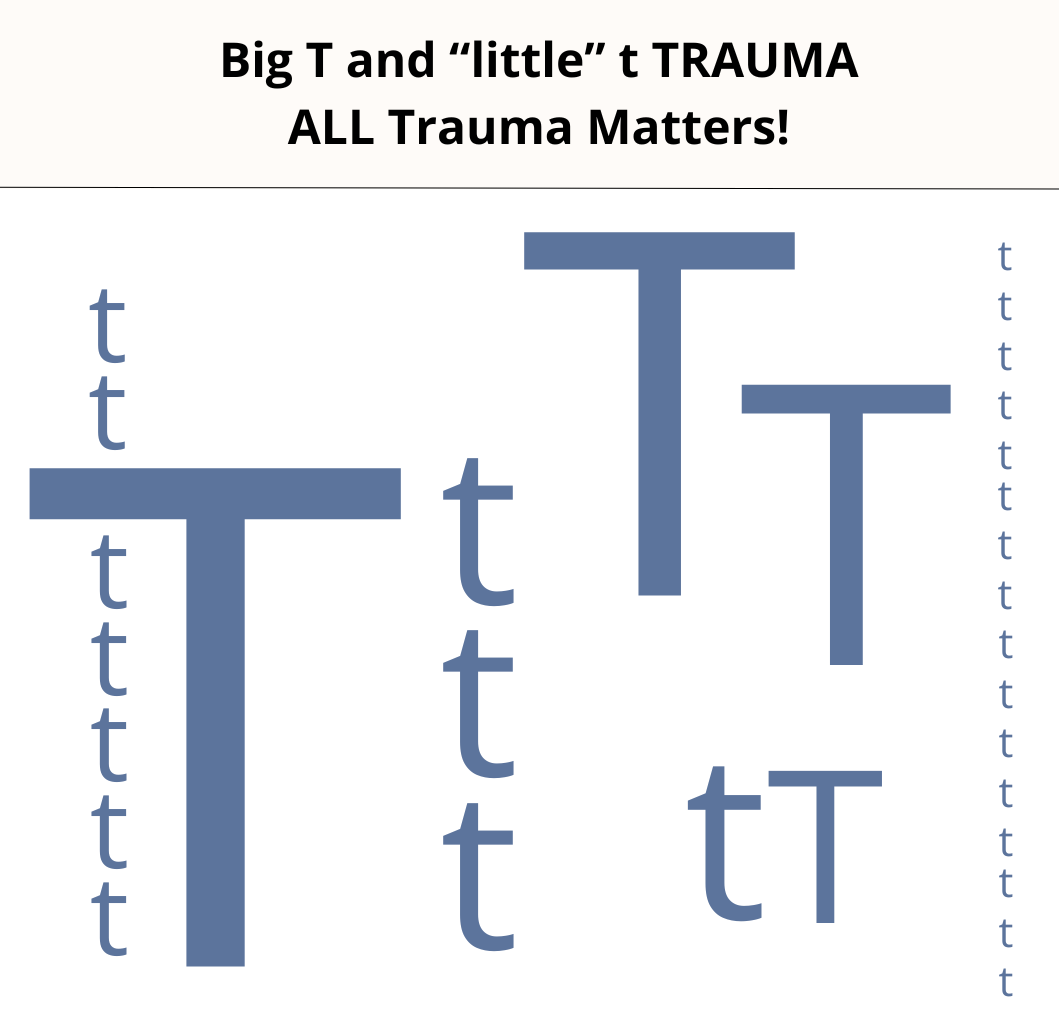
You may have heard the terms "Big T" and "little t" trauma. The problem with this distinction is that it creates a hierarchy — and that hierarchy isn't real.
A child who was chronically criticized, never felt good enough, or grew up without emotional safety or a secure attachment to caregiver— that nervous system was affected just as meaningfully as one who experienced what the world labels "Big T" trauma. The impact on self-esteem, self-worth, and sense of safety can be equally significant. And equally likely to increase the risk of chronic pain and symptoms later in life.
All trauma matters. The nervous system doesn't rank experiences by how dramatic they look from the outside — it responds to how unsafe or unseen it felt on the inside.So rather than asking "was my trauma bad enough to count?" — the better question is simply: how did it feel to be that child?